You have the right to take legal action for injuries caused by other people and parties’ negligence. However, local governments often have legal measures in place to protect themselves and their employees from litigation, making it difficult to win without legal representation.
Speak with one of our premises liability lawyers at Fieger Law to help you understand your legal options for suing the city after a fall on a public sidewalk. We can guide you through the process and ensure that you file all necessary documentation on time for your case. Contact us for a free consultation.
Common Injuries From Sidewalk Falls
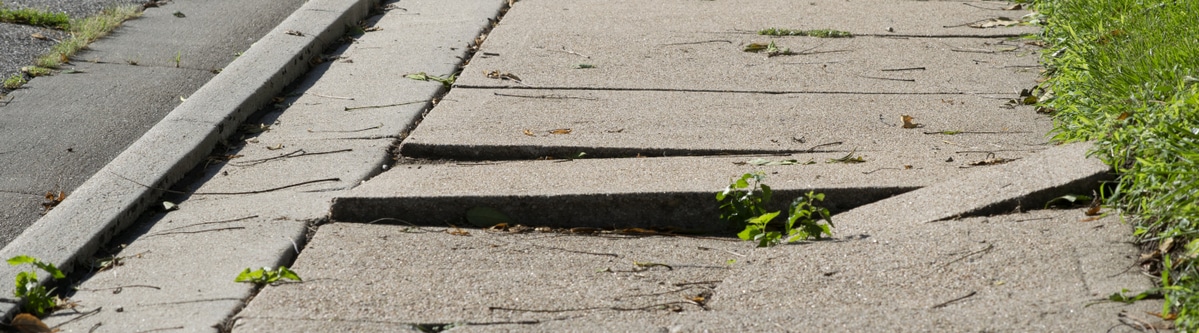
Tree roots, the freeze-thaw cycle between winter and summer, and negligence during construction all contribute to uneven sidewalks. Sidewalk surfaces can buckle or become uneven and dangerous to pedestrians over time due to a lack of maintenance and repair by the city.
Falling on an uneven or hazardous sidewalk can cause severe injuries such as:
- Head injuries, including traumatic brain injuries (TBI)
- Broken bones, such as hips, legs, and arms
- Contusions
- Shoulder injuries, such as dislocations and muscle tears
A personal injury lawsuit against the city may help you recover the costs of your medical treatment and any lost wages resulting from a slip and fall on an uneven public sidewalk.
Our experienced premises liability attorneys can analyze your case and determine if the city is liable for your accident. We can help you understand what it takes to file a lawsuit against the city and gather evidence to support your case and increase your chances of winning.
Can you sue the city after falling on an uneven sidewalk?
A valid slip-and-fall accident claim against a city government requires proving the following factors:
- The city government had a duty of care to repair and maintain the sidewalk.
- The city breached its duty of care and failed to take timely action to correct the dangerous aspect of the sidewalk.
- You suffered injuries and damages due to the city’s negligence.
Many states, counties, and cities require following strict procedures to file a claim against them, even if they acted negligently and caused your injury. In Michigan, for instance, you have significantly less time to file a claim against the city than you would for a typical injury claim. Your attorney from Fieger Law can assist you in submitting your notice on time and initiating your lawsuit.
How long do I have to sue the city in Michigan?
Most personal injury lawsuits give you three years after the date of injury to file suit. However, when you’re injured by a city or another government body, that period is reduced considerably. This is because the Governmental Tort Liability Act of Michigan provides immunity to governmental agencies and employees unless there are certain exceptions.
Moreover, when exceptions are available, they are usually accompanied by strict notice requirements that must be satisfied within 120 days to maintain the right to sue. The notice must contain:
- A full description of the defect
- The precise place where the injury took place
- The type of injury
Failure to give these notices, or to bring the suit within that timeframe, may cause the claim to be forever barred. People who have been hurt by a government entity should consult a lawyer as soon as possible after the accident. Our experienced personal injury lawyer at Fieger Law will help you understand the requirements and deadlines that apply to your case. Contact us for assistance.
What happens if the sidewalk is adjacent to a business or private home?
The city does not maintain every sidewalk. In most regions, the sidewalks in front of buildings or residences are the responsibility of the property owner, not the municipality. This implies that an investigation is needed to ascertain who is at fault.
In general:
- Structural faults, such as broken pavement or uneven slabs, are normally the duty of the city to repair.
- Local ordinances usually require that the owners of private property (both residential and commercial) maintain sidewalks free of snow, ice, and debris.
Businesses in high-traffic areas typically bear greater responsibility for care. That means they should inspect the sidewalks regularly and either repair or report any hazards. They may be liable for your injury if they knew of the situation and still did not take any action.
Who should you sue?
Who you should sue depends on the cause of the accident and the location where the accident occurred. For instance, in the case of a crumbling or sunken sidewalk on city property, you might have to file a claim against the city. In the event of snow, ice, or negligence on the part of a nearby homeowner or business, the business may be held liable.
Additionally, these cases often involve multiple parties and complex rules, making it advisable to consult a lawyer for the most appropriate action. At Fieger Law, we assist in identifying the right defendant, collecting evidence, and ensuring that you meet all the required deadlines.
Strict Evidence to Prove the City Government’s Liability for a Sidewalk
Many states require solid evidence to establish municipal liability for a sidewalk to file a claim. For instance, a municipal government in Michigan isn’t liable for sidewalk defects unless you can prove they were aware of, or should have known about, the sidewalk defect. If the municipality maintains a sidewalk, it is presumed to be in good condition.
You may only challenge this presumption with evidence showing the sidewalk as having a dangerous condition or defect at least two inches in size. Regardless, the municipal government will likely use common premises liability defenses to argue that your injury is your fault. For example, they may argue that the dangerous condition was “open and obvious” enough that you should have avoided it on your own. Hiring a lawyer can help you fight back against these defenses.
Notice Requirements
Tort claims acts require giving notice to the government entity within a specific timeframe so that they can approve the claim. This is why it is important to speak to a lawyer as soon as possible after being injured on public property, including public roads and sidewalks.
Financial Limits
Many states have financial limits for recovering money from government entities. Liability claims against state or local governments in Michigan are limited to economic damages. A government body may be liable for non-economic damages if there is a severe impairment of a physical function, a permanent severe disfigurement, or death. There needs to be factual, undisputed evidence of an injury for you to receive non-economic damages.
Why You Need an Experienced Attorney
If you are injured after falling on a city sidewalk, you may be entitled to compensation for your damages. However, pursuing a legal claim against a city or municipality can be challenging and requires expertise in navigating the complex laws and timelines of cases involving local governments.
An experienced attorney from Fieger Law can help. Our attorneys are familiar with state and local laws governing sidewalk maintenance and liability and can help protect your rights throughout the legal process.
With decades of experience handling personal injury cases, we have the knowledge and resources needed to successfully represent clients who have been injured on poorly maintained and dangerous city sidewalks. We will investigate the circumstances of your fall and collect evidence, such as photos of the sidewalk, medical reports, and witness statements, to file a timely claim on your behalf against the city.
At Fieger Law, we will work tirelessly to help you secure the compensation you deserve for your injuries.
Talk with Fieger Law After a Trip and Fall Accident
When suing the city after a trip and fall accident, Fieger Law has the knowledge and experience to navigate the complex legal process of filing your claim against the government. Our nationally recognized attorneys can help you hold the government accountable and get the justice and compensation you deserve.
Contact us today to schedule a free consultation with one of our attorneys.
Last Modified: July 28, 2025