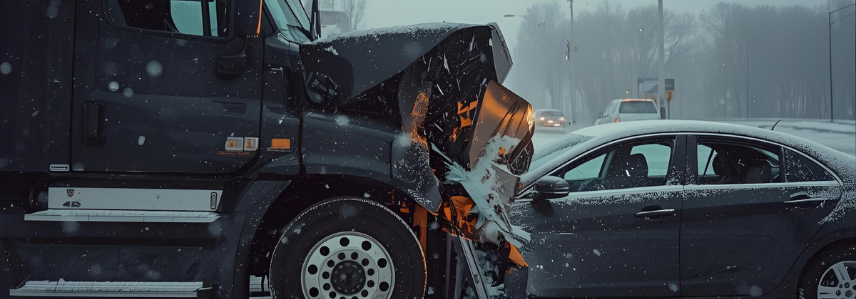
When Michigan winter hits, everything changes on the road. Snow, slush, black ice, and early darkness turn I-75, I-94, and neighborhood routes into dangerous corridors, especially when 80,000-pound semi-trucks are involved.
If you were hurt in a large truck crash this winter, you’re not just fighting the weather; you’re up against trucking companies, their insurers, and a complicated web of state and federal laws. That’s where our experienced Michigan truck accident lawyers become essential for proving negligence and protecting your right to full compensation.
Why Winter Makes Michigan Truck Crashes So Dangerous
Recent Michigan data shows just how risky winter can be. During the 2023–2024 winter season alone, there were 22,713 winter weather crashes, including 1,497 involving heavy trucks or buses. Michigan’s winter crash risks come from several overlapping hazards that affect how commercial trucks handle, how drivers react, and how quickly a situation can turn deadly.
Several winter-specific dangers increase the likelihood of these crashes:
Slippery Pavement and Black Ice
Winter storms leave roads covered in snow, slush, and invisible black ice that reduces traction. Nationally, about 12% of all crashes, around 745,000 a year, are weather-related, causing more than 3,800 deaths and 268,000 injuries annually.
When you combine slick pavement with a fully loaded tractor-trailer that already needs more time and distance to stop, even a small mistake can cause a catastrophic rear-end collision, jackknife, or multi-vehicle pileup.
Reduced Visibility and Shorter Days
Fog, blowing snow, sleet, and dark evening commutes make it harder for truck drivers to see traffic ahead, lane markings, and disabled vehicles. Federal safety data confirms that poor visibility contributes to many winter crashes. A trucker who keeps barreling ahead when they can barely see the road may be driving negligently.
Speed That’s Too Fast for Conditions
The Federal Motor Carrier Safety Administration (FMCSA) found that 23% of large-truck crashes involve drivers going too fast for conditions, even if they aren’t technically speeding under the posted limit.
Michigan’s own crash data shows the same pattern: in winter-weather crashes, speeding is the most common hazardous action recorded by police. If a truck driver fails to slow down for snow, slush, or black ice, it may be negligence.
Federal Rules Demand Extreme Caution in Bad Weather
Commercial drivers must use extreme caution in hazardous conditions such as snow, ice, or fog. They are required to reduce speed and, if conditions become too dangerous, to stop operating until it’s safe.
When a trucking company pushes a driver to stay on schedule instead of slowing down or stopping, they may be violating both federal law and basic safety standards.
Holiday Freight Rush and Pressure to Deliver
Winter also means peak shipping season. More online orders and holiday freight can lead to:
- Longer hours behind the wheel
- Tighter delivery windows
- Pressure to keep driving through storms
After a winter truck collision, every hour matters. Contact a truck accident lawyer to protect key evidence and your right to compensation.
Why Winter Truck Crash Claims Are So Hard to Win
Winter truck accidents are rarely simple. A single crash might involve multiple potentially liable parties, including:
- The truck driver
- The trucking company
- A broker or shipper
- A maintenance contractor
- Other passenger vehicles involved in a chain reaction
Furthermore, injuries from crashes involving commercial trucks are typically far more severe than in other crashes. Michigan data show that heavy trucks and buses were involved in 15,088 crashes in 2023, resulting in 103 deaths and 3,677 injuries, despite accounting for only about 5.2% of all crashes. With so much money on the line, trucking companies and their insurers fight aggressively to limit payouts.
Some of the challenges victims face:
- Multiple Insurance Policies and Defendants: Commercial trucks often carry numerous insurance policies with high limits. Insurers know exposure can be huge, so they move quickly to protect their interests, not yours.
- Complex Federal and State Rules: Cases often turn on violations of FMCSA regulations, hours-of-service rules, weight limits, and maintenance requirements that don’t apply to regular drivers.
- Disappearing Evidence: Electronic logging device (ELD) data, GPS records, dash cam footage, and maintenance logs can be overwritten or lost if they’re not preserved right away.
- Blame Shifting to The Weather: Carriers and insurers often say, “It was just the snow.” But Michigan’s own safety campaign says, “Don’t blame the weather.” Many winter crashes could be avoided if drivers simply slowed down.
Without a lawyer who understands truck crash litigation, it’s easy for injured victims to be talked into a low settlement that doesn’t begin to cover long-term medical care, lost income, or the impact on their daily lives.
How Michigan Truck Crash Lawyers Help Victims Recover Compensation
After a winter truck crash, your first source of help is usually your Michigan no-fault Personal Injury Protection (PIP) benefits, which cover medical expenses and a portion of lost income, no matter who caused the accident.
But if you suffered serious impairment of body function or permanent disfigurement, which is more common in large truck crashes, Michigan law allows you to file a lawsuit against the at-fault parties for pain and suffering and excess economic losses.
Experienced Michigan truck crash lawyers can help by:
- Investigating Quickly: Your legal team can send preservation letters, obtain ELD and black box data, request dash cam footage, analyze weather and road condition reports, and collaborate with accident reconstruction and trucking safety experts.
- Identifying Every Liable Party: This may include the driver, motor carrier, parent company, broker, shipper, maintenance shop, or even a parts manufacturer, expanding the pool of insurance coverage available to you.
- Proving Negligence Despite Bad Weather: By tying together speed data, stopping distances, FMCSA regulations, maintenance records, and witness statements, your lawyer can show that the crash wasn’t just an unavoidable winter hazard.
- Calculating Full Damages: A serious truck crash can result in surgeries, rehabilitation, lost careers, and lifelong physical limitations. Your attorney will document not only your current medical bills and lost wages, but also future care needs, loss of earning capacity, and pain and suffering.
- Handling Negotiations and Litigation: Trucking insurers are sophisticated and aggressive. Hiring a law firm that has taken on big carriers before lets them know you’re serious about getting fair compensation.
Contact Our Michigan Truck Crash Lawyers
If you or a loved one were hurt in a winter truck crash in Michigan, you don’t have to untangle federal trucking rules, Michigan’s no-fault law, and multiple insurance companies on your own.
Our truck accident lawyers can investigate what happened, protect crucial evidence, and fight for the compensation you need to move forward.
Reach out today for a free consultation and get an experienced team on your side before the trucking company and its insurer start building a defense against your claim.
Your recovery matters. Let us fight for you.