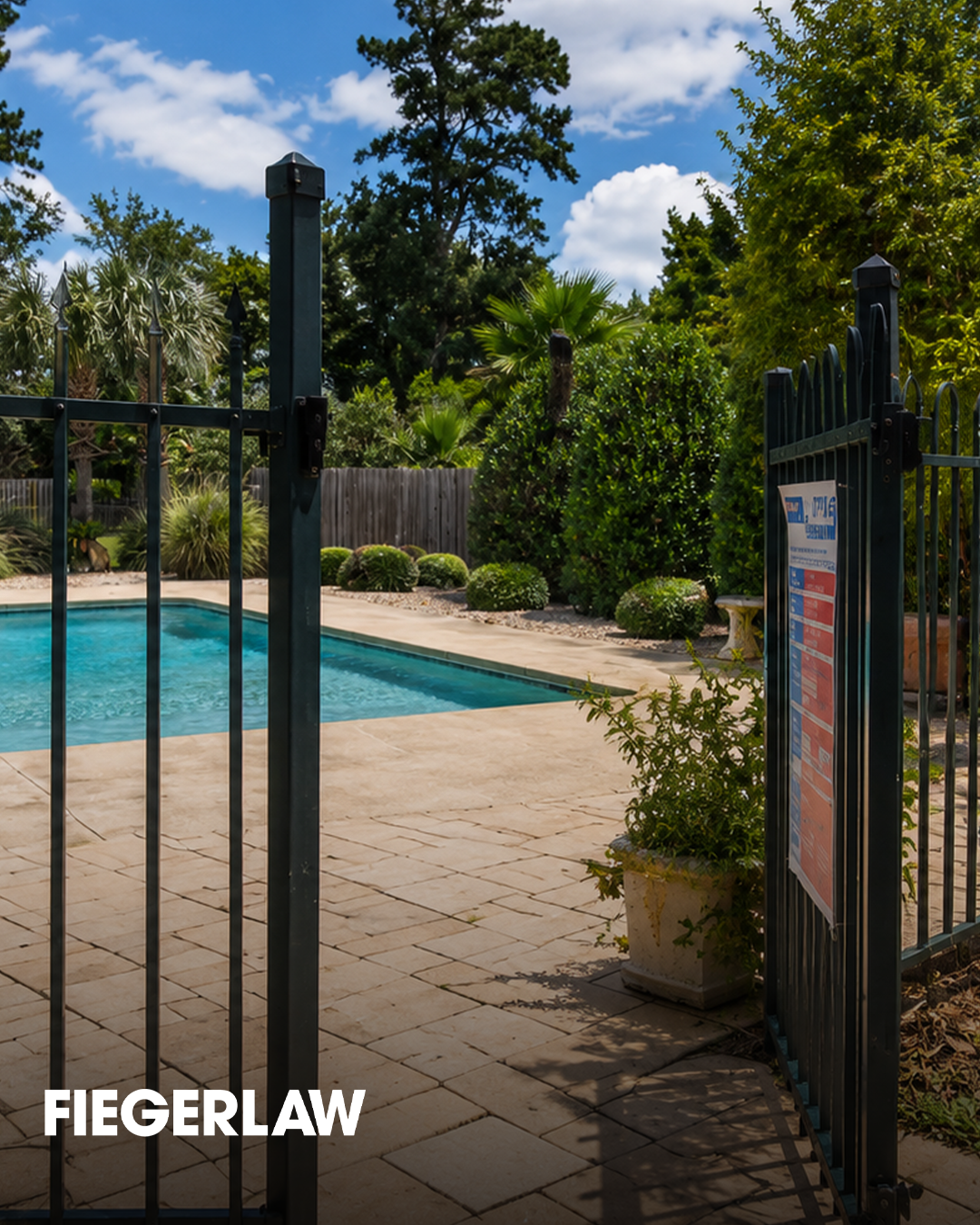
A child can slip through an unsecured gate and reach a swimming pool in seconds. What happens next can change a family forever.
When children are injured on someone else’s property, many parents assume there are no legal options if the child technically was not supposed to be there. But Michigan law recognizes an important reality: young children often do not understand danger the way adults do.
That principle is at the heart of the attractive nuisance doctrine. Under this legal concept, property owners can sometimes be held responsible when a dangerous condition on their property attracts children and leads to serious injuries.
Swimming pools are one of the most common and dangerous examples. Missing fences, broken gates, unsecured ladders, or a lack of proper supervision can create life-threatening risks for children who wander into an unsafe area.
The Fieger Law team understands how devastating these accidents can be and how quickly a preventable hazard can change a family’s life.
For families dealing with the aftermath of a child injury, our experienced Michigan premises liability lawyers can help investigate what went wrong and whether negligence played a role.
What is an Attractive Nuisance?
An attractive nuisance is a hazardous condition or feature on a property that is likely to draw children onto the property, even when they are not invited.
Children are naturally curious. They may not recognize the risks associated with water, construction areas, abandoned equipment, or other dangerous conditions. Because of this, property owners have a legal duty to take extra precautions when they know children could be attracted to a dangerous area.
While attractive nuisance cases can involve trampolines, abandoned vehicles, machinery, or vacant buildings, residential swimming pools remain one of the most dangerous hazards for young children.
The U.S. Consumer Product Safety Commission reports that approximately 280 children under age five drown in pools each year nationwide, and another 2,200 require emergency room treatment for submersion injuries. Most of these incidents occur in residential pools.
Michigan courts analyze attractive nuisance claims under broader premises liability and negligence principles, including whether a dangerous condition created a foreseeable risk of harm to children.
Our attorneys investigate unsafe property conditions, safety failures, and whether the property owner knew of the danger before the accident.
Why Swimming Pools Create Serious Risks
Residential swimming pools can become extremely dangerous when proper safety measures are missing. To a child, a pool may look inviting and harmless. In reality, a moment of unsupervised access can result in catastrophic injuries or death.
Data from the Centers for Disease Control and Prevention (CDC) shows that drowning continues to be one of the leading causes of injury-related death among young children in the United States.
Property owners with swimming pools are expected to take reasonable safety measures to reduce the risk of unsupervised access by children, including:
- Installing secure fencing around the entire pool area
- Using self-latching and self-closing gates
- Locking pool entrances when the area is not supervised
- Maintaining pool covers, alarms, and safety equipment
- Repairing broken gates, fencing, or barriers promptly
- Securing above-ground pool ladders when pools are not in use
- Addressing hazards such as damaged drain covers or slippery pool decks
When these safeguards are ignored or poorly maintained, children can gain access to dangerous areas in seconds.
If your child was injured at or near an unsecured pool, contact us right away for legal guidance.
When Can a Property Owner Be Held Liable?
Not every accident automatically creates liability. However, property owners may be legally responsible when they fail to take reasonable steps to protect children from foreseeable dangers.
In attractive nuisance cases, several factors may become important, including:
- Whether the property owner knew children were likely to enter the area
- Whether the condition posed an unreasonable risk of serious harm
- Whether the child was too young to appreciate the danger
- Whether reasonable safety precautions could have reduced the risk
- Whether the burden of fixing or securing the hazard was relatively small compared to the danger involved
For example, a homeowner who leaves a pool unfenced in a neighborhood filled with young children may face very different legal exposure than someone who maintains proper barriers and safety measures.
These cases are highly fact-specific, which is why thorough investigation matters. Surveillance footage, maintenance records, witness statements, property photographs, and prior complaints can all become important evidence.
Our attorneys know how to investigate these situations and build a case that holds negligent owners responsible.
Injuries Commonly Associated with Unsecured Pools
Swimming pool accidents often result in severe and life-altering injuries, especially for young children.
Some of the most common injuries include:
- Drowning fatalities
- Near-drowning incidents resulting in oxygen deprivation
- Brain injuries caused by a lack of oxygen
- Spinal cord injuries from diving accidents
- Broken bones and head injuries from slips and falls
- Traumatic injuries involving pool decks, ladders, or surrounding structures
The long-term effects of near-drowning incidents can be devastating. Children may require ongoing rehabilitation, neurological care, therapy, or lifelong medical support.
When a preventable pool accident changes a child’s life, families deserve answers and accountability.
The CDC notes that nonfatal drowning incidents can lead to serious injuries, including brain damage and permanent disability.
We help families investigate unsafe property conditions, secure critical evidence, and pursue the financial recovery children may need for ongoing care and support.
How Fieger Law Helps Families Pursue Accountability
After a serious child injury, families are often left facing overwhelming medical expenses, emotional trauma, and difficult questions about what could have been prevented.
In many cases, these incidents happen because known safety risks were ignored, or dangerous conditions were left unsecured.
Our legal team works to hold negligent property owners accountable and seek compensation for families affected by serious, preventable injuries.
That may include investigating:
- Missing or defective pool fencing
- Broken gates or locks
- Inadequate property maintenance
- Prior safety complaints
- Violations of local safety codes
- Lack of reasonable supervision or security measures
Pool injury cases often depend on proving what the property owner knew, what protections were missing, and whether the danger could have been prevented with reasonable safety measures.
Families may be able to recover compensation for:
- Medical expenses
- Rehabilitation and therapy costs
- Long-term medical care
- Pain and suffering
- Emotional trauma
- Other damages connected to the injury
When a preventable pool accident changes a child’s future, families deserve answers, support, and the financial resources needed to move forward.
If a property owner’s negligence put your child at risk, we are ready to fight for your family.
Contact Fieger Law for a Free Consultation
A child injury involving an unsecured swimming pool or dangerous property condition can leave families dealing with emotional and financial burdens that last for years.
Evidence in these cases can disappear quickly. Unsafe conditions may be repaired, surveillance footage may be erased, and property owners may dispute what existed before the injury occurred.
The premises liability lawyers at Fieger Law understand the complexities of attractive nuisance claims and the importance of acting quickly to secure evidence and protect your child’s rights.
If your child was injured in or around an unsafe swimming pool or other preventable property hazard, contact Fieger Law today for a free consultation to discuss your legal options.